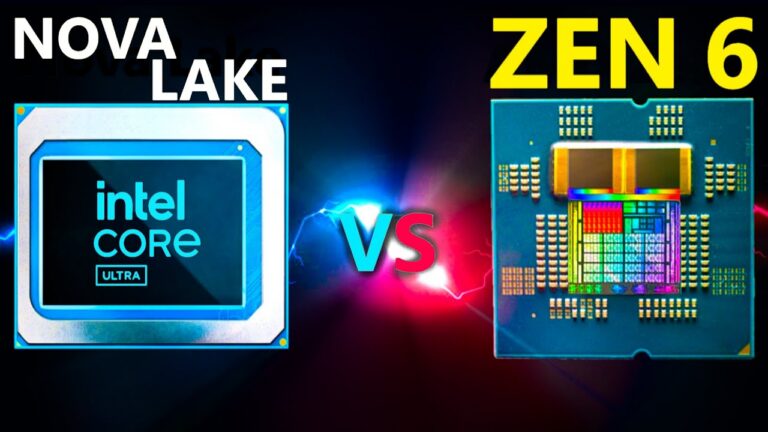
AMD is preparing its most ambitious architectural leap yet. The Zen 6 architecture, expected to power the Ryzen 10000 series desktop processors, will mark AMD’s first foray into TSMC’s cutting-edge 2nm process node. Here’s everything we know about what could be the most significant generational jump in Ryzen history.
Breaking: Ryzen 10000 Release Date Pushed to Late 2026 or CES 2027
Industry sources now indicate a late 2026 launch window for AMD’s next-generation Ryzen 10000 processors. However, supply chain analysts and leakers suggest a possible delay until CES 2027 remains realistic given the complexity of TSMC’s 2nm ramp.
Key timeline factors:
- TSMC’s 2nm production begins limited risk production in late 2025
- Volume manufacturing targets mid-2026
- AMD’s typical 12-18 month gap between architecture announcement and retail availability
- Competitive pressure from Intel’s 18A node may influence pacing
If the CES 2027 scenario materializes, this would represent roughly a two-year gap following the expected Ryzen 9000 series refresh cycle.
Zen 6 Specs: What 2nm Delivers
TSMC’s 2nm process (officially N2) abandons FinFET transistors in favor of Gate-All-Around (GAA) nanosheet technology. For Ryzen 10000 and Zen 6, this translates to tangible performance advantages:
- 10-15% performance uplift at iso-power versus 3nm
- 25-30% power reduction at iso-performance
- Significant transistor density increase enabling larger caches or more cores
- Improved voltage scaling for higher sustainable clock speeds
Architecturally, Zen 6 is expected to deliver:
- Revised front-end with improved branch prediction
- Wider execution resources and deeper reorder buffers
- Enhanced AI acceleration capabilities (competing with Intel’s NPU integration)
- Potential memory controller upgrades for faster DDR5 support or early DDR6 preparation
Ryzen 10000: Platform and Compatibility Expectations
AMD’s platform strategy for Ryzen 10000 remains unconfirmed, though several scenarios carry weight:
- AM5 socket longevity: AMD has committed to AM5 through 2025+; 2nm Zen 6 may test this promise
- Chiplet evolution: More aggressive use of 3D V-Cache stacking on 2nm compute dies
- IOD considerations: Separate I/O die likely remains on mature node (3nm or 4nm) for cost efficiency
- PCIe 6.0 readiness: 2nm IOD would enable next-generation connectivity standards
The 2nm transition’s cost implications cannot be understated. TSMC N2 wafer prices are projected to exceed $25,000—substantially above current 3nm pricing. AMD’s chiplet approach becomes even more critical for yield management.
Competitive Landscape: Why Zen 6 Timing Matters
Intel’s 18A process (equivalent to 1.8nm marketing) targets 2025 production, potentially giving Team Blue a temporary node advantage. However, TSMC’s track record for foundry customers suggests N2 will deliver superior transistor characteristics where it counts—power efficiency and density.
For enthusiasts and professionals evaluating upgrade cycles:
- Ryzen 7000/9000 owners on AM5 face a genuine crossroads
- The 2nm jump justifies waiting if workloads demand maximum efficiency
- DDR5 platform investment retains value regardless of 2026/2027 timing
Bottom Line
The Ryzen 10000 series with Zen 6 and TSMC 2nm represents AMD’s most technically demanding transition since the original Zen launch. The late 2026 release date remains the working target, but CES 2027 is increasingly plausible. For builders planning today, existing AM5 platforms offer compelling performance; for those who demand bleeding-edge efficiency, patience through 2026 may yield substantial dividends.
We will update this analysis as TSMC’s 2nm ramp progresses and AMD confirms official Ryzen 10000 specifications and launch timing.