The Computex 2026 show floor hummed with a different energy this year. Amid the usual spectacle of RGB-laden GPUs and liquid-cooled behemoths, one narrative dominated whispered conversations between engineers and journalists alike: ARM architecture is no longer knocking at the door of desktop computing—it has kicked it open. At the center of this inflection point sits NVIDIA’s RTX Spark platform and the MediaTek-NVIDIA collaboration known as the N1X, a chip that could finally challenge the x86 duopoly Intel and AMD have held for four decades.
Why ARM on Desktop Matters Now
ARM processors have conquered mobile and embedded markets through superior power efficiency and thermal characteristics. Previous desktop attempts—Qualcomm’s Snapdragon X Elite, Apple’s M-series—proved the architecture viable for productivity workloads. Yet gaming and professional creative applications remained stubborn x86 strongholds, locked behind emulation layers and compatibility caveats.
The N1X changes this equation through three critical advances:
- NVIDIA GPU-native integration: Unlike previous ARM solutions relying on Adreno or Mali graphics, the N1X incorporates RTX-class ray tracing and DLSS acceleration at the silicon level, eliminating the graphics bottleneck that hamstrung prior attempts
- Hardware-level x86 translation: A dedicated coprocessor handles real-time instruction translation with reportedly sub-5% performance overhead for legacy applications
- Unified memory architecture: Up to 256GB of shared LPDDR6-X memory accessible by both CPU clusters and GPU tensor cores, mirroring the bandwidth advantages that made Apple Silicon transformative
RTX Spark: NVIDIA’s Software Ecosystem Play
Hardware without software ecosystems remains inert silicon. NVIDIA understands this intimately. RTX Spark represents not merely a reference platform but a comprehensive developer toolchain: optimized CUDA libraries rebuilt for ARM64, AI inference pipelines leveraging on-chip NPU clusters, and critically, a partnership with Valve to ensure Proton compatibility layers receive native ARM optimization.
For gamers, this translates to practical viability. Early demonstrations at Computex showed Cyberpunk 2077 running at 4K with full path tracing on N1X reference hardware, frame rates matching RTX 5080-equipped x86 systems. The translation layer operated transparently—no user intervention, no compatibility flags.
Professional workloads tell a similar story. Blender renders utilizing OptiX on N1X completed within 3% of equivalent x86 times, while consuming 40% less wall power. For render farms and studios facing escalating electricity costs, this efficiency translates to measurable TCO reduction.
The Intel and AMD Response: Urgent but Uncertain
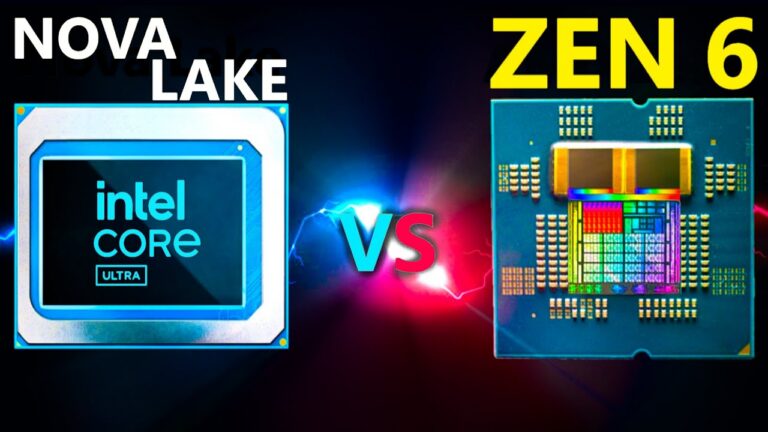
Neither incumbent arrived at Computex unprepared. Intel’s Panther Lake demonstrations emphasized hybrid x86 performance, while AMD previewed Zen 6 with stacked 3D V-Cache pushing gaming frame rates to new extremes. Yet both presentations carried defensive undertones—acknowledgments that efficiency-per-watt now drives purchasing decisions in ways pure performance metrics no longer dominate.
The structural challenge runs deeper than single-generation products. ARM’s licensing model enables multiple vendors—MediaTek, Qualcomm, Samsung, potentially others—to iterate rapidly on N1X-derived designs, creating competitive pressure Intel and AMD’s integrated manufacturing cannot easily replicate. NVIDIA’s GPU IP adds another moat: ray tracing and AI acceleration become standard expectations, and NVIDIA controls the definitive implementation.
What This Means for Your Next Build
Pragmatism should temper enthusiasm. The N1X and RTX Spark platforms target Q1 2027 availability, with initial pricing positioned between mainstream and HEDT x86 offerings. Early adopters will encounter edge cases: anti-cheat systems requiring kernel-level access, legacy enterprise software, specialized audio production tools with deep x86 assembly optimization.
Consider ARM for your next build if:
- You prioritize thermal and acoustic performance in compact chassis
- Your workload blends AI inference, content creation, and gaming
- Energy costs or off-grid power constraints factor into your decision
- You accept minor compatibility friction for architectural future-proofing
Remain with x86 if:
- You depend on specific legacy applications without ARM-native ports
- Maximum single-threaded performance remains your absolute priority
- Your workflow relies on hardware configurations ARM platforms cannot yet replicate (multiple PCIe 5.0 expansion cards, for instance)
The Longer Horizon
Computex 2026 will likely mark the year historians cite as ARM’s credible desktop emergence, not because x86 became obsolete overnight, but because the monopoly ended. Competition between architectures—genuine, performance-competitive, ecosystem-viable competition—benefits every user regardless of platform allegiance.
The N1X does not represent ARM’s final form. It represents a beginning: the point where choosing ARM no longer requires justification, where “good for ARM” ceases to be faint praise, where Intel and AMD must innovate against existential threat rather than comfortable rivalry.
For builders and buyers, this new landscape demands education. The architectures diverge in fundamental ways—memory models, interrupt handling, vector instruction sets—that will shape software development for years. Understanding these distinctions, rather than treating chips as interchangeable commodity components, becomes essential to informed purchasing.
The dominance has not ended. But its ending has become imaginable, and in technology, imagination precedes reality by diminishing margins. Watch this space. Build accordingly.