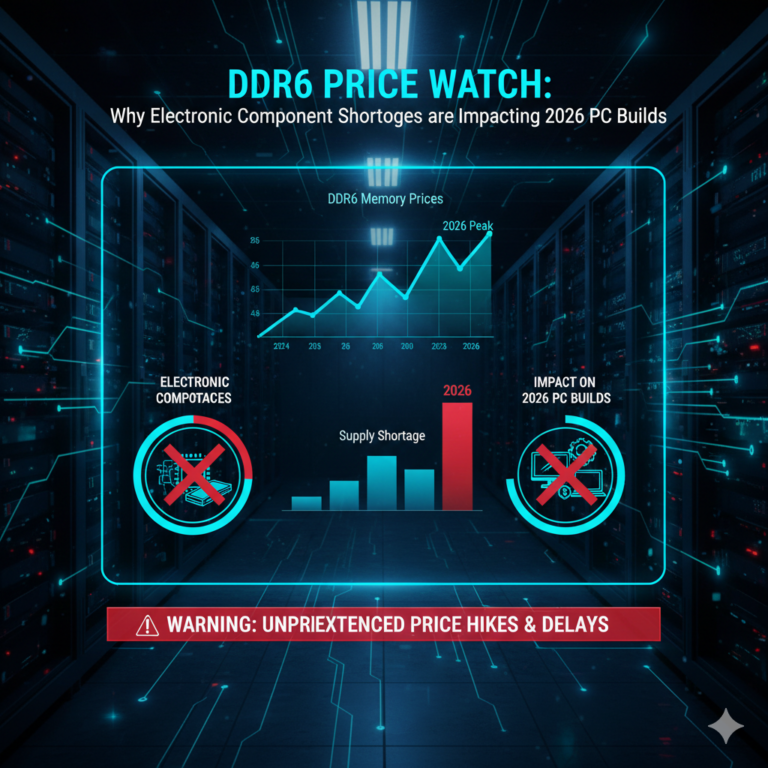
The DRAM Crisis Is Here: Why Memory Prices Just Went Nuclear
If you’ve been pricing out a PC build lately, you’ve probably done a double-take at your shopping cart. That 32GB DDR5 kit you bookmarked last month? It’s now costing you significantly more. Welcome to the 2024-2025 DRAM crisis—arguably the most severe memory shortage in a decade, with the three dominant manufacturers driving price increases that have topped 600% in some segments.
Micron, SK Hynix, and Samsung control roughly 96% of global DRAM production. When all three move in the same direction simultaneously, the market doesn’t just shift—it convulses. This isn’t speculation. It’s happening now, and it’s reshaping build budgets across every tier of the PC market.
How We Got Here: The Perfect Storm
Several converging factors created this crisis. Understanding them helps explain why this isn’t a simple “prices went up” story—and why relief isn’t imminent.
- AI infrastructure demand: Data centers are hoarding HBM3E and high-capacity DDR5 modules for AI training clusters. Production capacity that once served consumer markets has been reallocated.
- Manufacturing node transitions: The shift to sub-20nm and EUV-based processes (1α, 1β nodes) has temporarily reduced yields and output across all three fabs.
- Strategic supply discipline: After years of oversupply and bleeding profits, the big three have collectively tightened wafer starts. They’re finally prioritizing margin over market share.
- Geopolitical supply chain friction: Export controls, raw material constraints, and logistics complications continue to create bottlenecks.
The result? Spot prices for certain DRAM modules have multiplied sixfold from their 2023 lows. Contract prices for DDR5 have more than doubled. And consumer channels are feeling it last—but hardest, because we’re at the bottom of the priority ladder.
What 600% Actually Looks Like on Your Build
Let’s ground this in real numbers. These are representative street prices for quality dual-channel kits:
| Configuration | Late 2023 Price | Current Price |
|---|---|---|
| 32GB DDR5-5600 (2x16GB) | ~$75-85 | ~$140-180 |
| 64GB DDR5-6000 (2x32GB) | ~$150-180 | ~$320-400+ |
| High-end 32GB DDR5-7200+ | ~$120-140 | ~$250-350 |
The 600% figure primarily hits specialized segments—server-grade LRDIMMs, certain HBM allocations, and spot-market bulk purchases. But consumer DDR5 has still seen 80-150% increases, with premium kits pushing toward that upper bound. DDR4 hasn’t been spared either; as DDR5 production gets squeezed, legacy node capacity has been further constrained.
What the Community Is Saying
The social media response has been immediate and vocal. On X/Twitter, hardware analysts and frustrated builders alike are tracking daily price movements. Threads with #DRAMCrisis and #MemoryPrices are gaining traction as users share screenshots of carts abandoned due to sticker shock.
Reddit’s r/buildapc, r/hardware, and r/pcmasterrace have seen a surge in posts asking:
- “Should I buy RAM now or wait?”
- “Is 16GB still viable to save money?”
- “Why did my saved PCPartPicker list jump $200 overnight?”
The consensus emerging from knowledgeable community members is grim: this isn’t a temporary blip. Multiple threads cite analyst forecasts (TrendForce, IC Insights) suggesting elevated pricing through at least Q3 2025, with some scenarios extending into 2026.
Practical Guidance for Builders Right Now
We won’t sugarcoat this—there’s no magic workaround. But there are ways to navigate the crisis strategically:
- If you need a build now: Consider starting with a smaller kit (16GB or single 32GB module) and upgrading later. Ensure your motherboard has open slots. This sacrifices dual-channel performance temporarily but preserves budget flexibility.
- Don’t downgrade to questionable brands: The gray market is flooding with relabeled, downbinned, or counterfeit modules. Stick to authorized retailers and verified SKUs. A “deal” that saves $30 isn’t worth system instability or data loss.
- DDR4 remains viable for many builds: If you’re not building a cutting-edge AM5 or high-end Intel platform, a mature DDR4 build with 32-64GB still delivers excellent real-world performance at relatively saner prices.
- Monitor enterprise liquidation channels: Occasionally, data center decommissioning releases quality server memory into secondary markets. This requires diligence and verification but can yield legitimate savings.
- Consider pre-built systems: OEMs negotiate long-term contracts and absorb some price volatility. For budget-constrained buyers, a quality pre-built from a reputable manufacturer may offer better overall value than DIY in this environment.
The Hard Truth About Recovery
Previous DRAM cycles—2017-2018’s spike, 2021’s pandemic disruption—eventually corrected through a combination of demand destruction and capacity expansion. This cycle differs because AI demand is structurally transformative, not cyclical. Data center memory consumption isn’t going to revert to pre-AI levels.
New fabs take 2-3 years to come online. The big three are investing, but cautiously. They’ve learned from oversupply bloodbaths. Don’t expect a price collapse; the best realistic scenario is gradual stabilization at a new, higher baseline.
Bottom Line
The DRAM crisis is real, it’s severe, and it’s directly impacting whether your next PC build fits your budget. The 600% price surge from the three manufacturers who control virtually the entire market isn’t a headline—it’s your new reality at checkout.
Build smart. Buy verified. And if you have functional memory in an existing system, think carefully about whether an upgrade is genuinely necessary right now. Patience, in this market, is a genuine financial strategy.